
What is Chop and Drop?
Chopping and Dropping is essentially the practice of chopping up plant material and leaving it there on your garden soil. It mimics what nature has always done – plants large and small drop their leaves, flowers, and branches, which decompose in place, thus feeding the soil and future generations of plants. It is an important element of many sustainable agriculture systems and is increasingly studied and backed by science.
Benefits of Chopping and Dropping?
Nutrient Cycling – nutrients pulled from the soil and into the plant go right back into your soil to feed earthworms, fungi, and beneficial soil microbes. Direct nutrient cycling is more efficient than composting!
Reduced need for fertilizers – when we’re taking advantage of natural nutrient cycling, we don’t need to spend money on fertilizers, even organic ones.
Moisture and temperature regulation – chopped and dropped plants act as a mulch, which keeps moisture in the soil and helps keep the soil cooler.
Prevents soil erosion – the good soil that you’re creating is protected and stays in place.
.
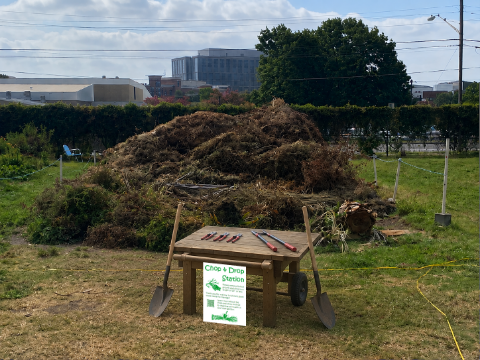
What is good to chop and drop, and what isn't?
Any healthy, non-invasive plant material can (and should!) be chopped and dropped. Plants that are especially good for chopping and dropping include cover crops such as pigeon peas, sweet potato vines, and drought-adapted natives.
*Plants that should NOT be chopped and dropped in your garden include:
—Seeded weeds such as lambsquarters, pigweed, and crabgrass with seed heads
—Diseased plant material such as tomato or potato foliage showing blight or squash vines with mildew
—Invasive species with rhizomes such as mint, bindweed (especially with seed heads), or Bermuda grass
—Alleopathic species such as black walnut leaves and garlic mustard
How to do it?
Use pruners or loppers to prune healthy, actively growing plants, or to cut up spent (but still healthy) plants at the end of their production. Plants chopped into 1-2 inch pieces will break down and feed your soil faster, but can also feed weeds. A mix of larger and smaller chopped pieces will feed your soil gradually. For established beds, keep your dropped plant mulch to 2-4 inches, or start annual seedling beds with just 1 inch and add more chopped material as they grow. More than 4″ can suffocate important soil microbes. Keep any mulch pulled back one inch from the stems of healthy, active plants