
Composting
Composting Feasibility Study
On August 11, 2026, the CGICT Board authorized the formation of a Sustainability Workgroup, an open, self-organizing and self-directed group of members to make monthly progress reports to the board, to monitor, measure and report the environmental impact of the site, and to conduct research into the feasibility of a new composting program, publishing a report with recommendations by May 1, 2027.
Hot Black Gold in the Leaf Pile!
by Scott Morris
August 6, 2026
For the first time in years, the leaf pile is composting. Moisture from frequent rains and a bit of aeration from the tractor operators grooming it a few weeks ago triggered the process. Compost generated from leaves, also known as leaf mold, is a clean, balanced, living soil amendment that results from a lower-temperature fungal process. It boosts organic matter, improving moisture retention and feeding bacteria essential for nutrient availability and soil health. Leaf mold can be worked directly into soil from the pile, used as a top dressing mulch, or as a seed starting medium if sifted through a ½” mesh. It has almost no inorganics, so most of it will ultimately gas off. Newer leaves added to the northern end of the windrow are drier and not active, so you’ll have better results mining dense material from the southern end. Please keep the pile as neat as possible as you remove the dry capping material.
The compost core is estimated to be about 30 cubic yards in size, about half of the 60 cubic yards of leaves measured on August 4th. Midline temperature readings at a height of four feet were recorded as high as 123 degrees. The temperatures closer to the ground were lower, likely due to more anaerobic conditions caused by the weight of the material above it. Most of the leaves are from the live oak leaf drop in March. Brought to our site by landscapers, leaf windrows have been a part of the site’s landfill diversion and large-scale composting program begun over 40 years ago.
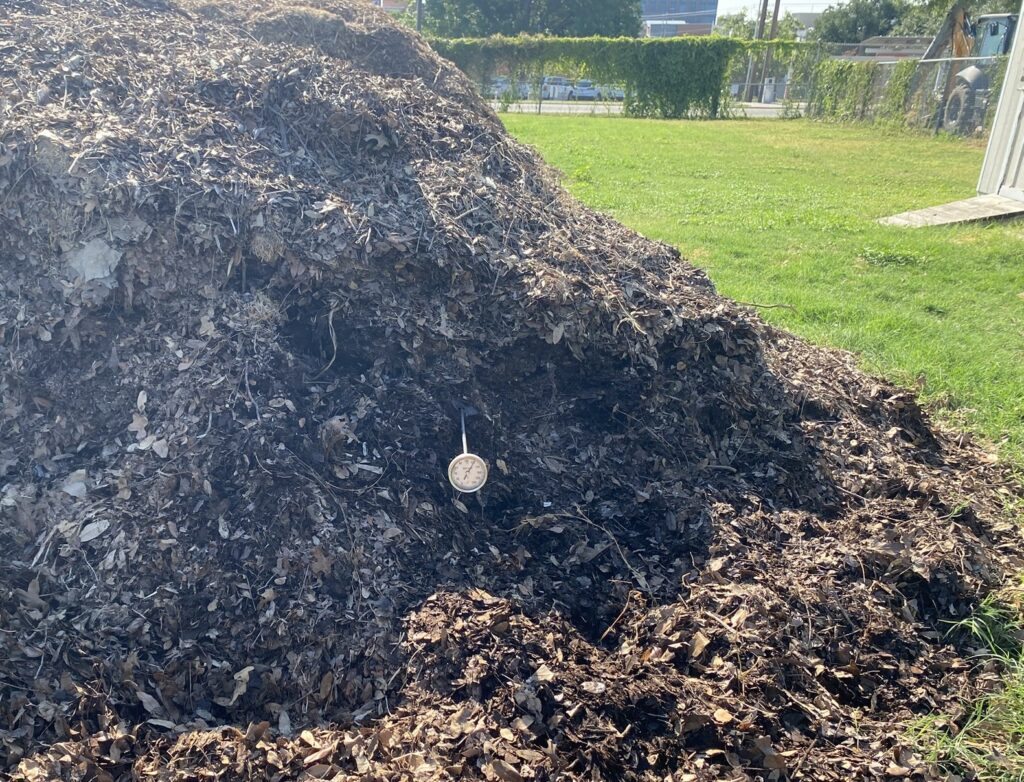
While the extra rain this season has caused everyone countless hours of additional site and plot maintenance, it’s great that it delivered the unexpected reward of 15 tons of free compost!