
Weekly Weeder
John Falvey
by Ila Falvey
October 8, 2026

My dear husband and wonderful friend, John Falvey passed away on Oct. 6. He was the chief elf, organizing and decorating for Sunshine’s Christmas party for many years.
Children’s Garden FunFest/WorkDay
October 17, 9-11 am
by Pam Kirby
October 8, 2026
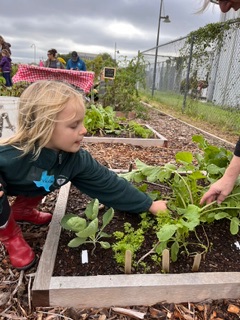
This year’s Children’s Garden FunFest/WorkDay is Saturday, October 17, 9-11am! We have a fun and productive morning planned and hope you will join us.
All Sunshine gardeners welcome!
Volunteers Needed for October 18 Event
by Lauren Ames
October 8, 2026
There will be a TreeFolks tree planting day in North University on October 18 (the actual time has not been announced – more details to come). If you are interested in volunteering to staff a Sunshine Community Garden table to share information about the garden on that date, please email Lauren and Jessica (vicepresident@cgict.org and volunteeratscg@gmail.com).
Please Report Repairs
by Lauren Ames
October 8, 2026
If you see items at the garden that need to be repaired, such as broken hose stands or damage to the trailer or tool shed, please enter them into this form so the board can prioritize the repairs:
https://forms.gle/VM6eJd15MVoq4rCy9
Thank you!
Garden Gallery:Muddy Mamba Watercolor
Painting and photograph by Katherine Carls
October 8, 2026
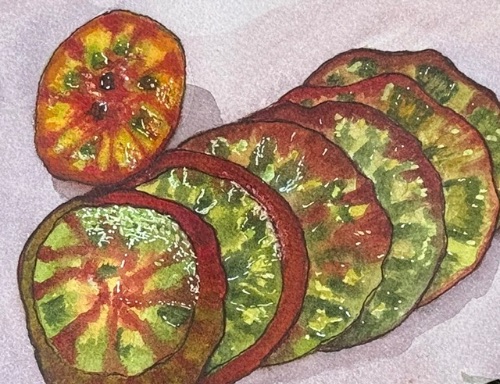
One of my spring tomatoes (Muddy Mamba gifted by Randy Thompson) was so pretty, I had to paint it. I started watercolor painting about the same time I joined Sunshine Community Gardens. These are my two favorite things to do in my retirement.
A First: Community Gardens on the Ballot This November
by Scott Morris
October 8, 2026
Austin City Council has decided to advance community gardening in this November’s Proposition A bond election. This marks an important policy shift, and the first time Austin voters will decide on bond funding for community gardens. While only a relatively small portion of the $260 million bond is earmarked for parkland improvements to community gardens – the last information available states that it is a $500,000 line item – these funds will be dedicated to actual infrastructure and improvements, and not programmatic or operational expenses, for new and existing gardens on city-owned parkland. Prop A is not alone. Voters will also have a chance to vote on Proposition B, $35 million for improvements to the city’s library system. Austin Public Library has played a supportive role for Sunshine gardeners, in providing meeting space for its committees over the years, as well as hosting community gardening resources such as the Seeds and Sustainability program at several branches.
It may not sound like a lot for a city Austin’s size, but in the right hands, a $500,000 bond allocation can go a long way. If the development approach relied on volunteers, as it did with the development of our Sunshine Site, $500,000 would cover all the capital costs of the irrigation system, perimeter fencing, tool shed, office and bathroom for NINE sites of Sunshine’s size. With a lean development model and a flat, large-scale, allotment-style design like Sunshine’s, a community garden experience could reach over 3,100 Austinites if this bond passes. And in a recent memo to Council, Austin Parks and Recreation also released an inventory of passive parks, identifying land that could be developed as community garden space. There’s a ton of it.
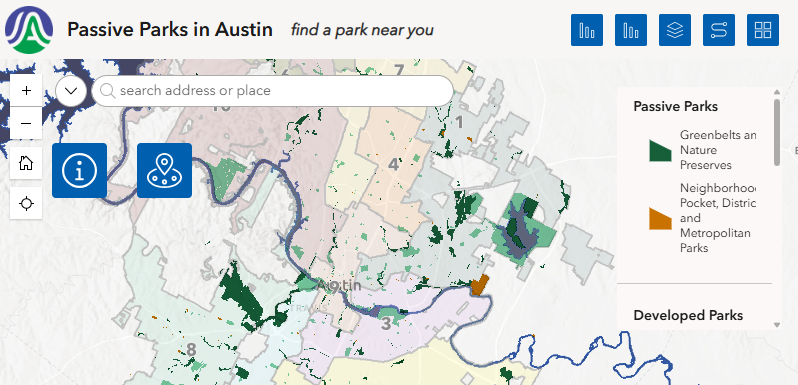
The Austin Parks Foundation played a lead role in developing the bond and in designing new community gardens on parkland. If you are interested in working on the Prop A and Prop B campaigns, please contact me at scott@austinencode.com.
Khaki Weed Advice
by Susan Hoberman
October 8, 2026
I have gardened at Sunshine since 1982.
I have long managed the khaki weed in front of my garden by not only taking off the top and putting it in the weed pile, but also by digging down and removing the root. If the root is not removed, the khaki weed will come back in the same place again and again.
Of course, the best time to get rid of the root is after a soaking rain like last Thursday.
So yes, you can take off the top, but this is only an expediency. Take time to get the root.
Garden Education by Ila Falvey
October 8, 2026
🥕 🥕 🥕
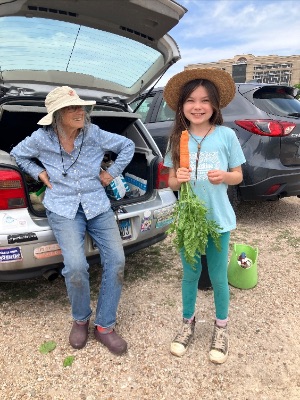
Carrots seeds cannot be allowed to dry out. Also, they can take several weeks to germinate.
Children’s Garden FunFest/WorkDay
Saturday, October 17
by Pam Kirby, Children’s Garden Coordinator
October 1, 2026
This year’s Children’s Garden FunFest/WorkDay is Saturday, October 17, 9-11am! We have a fun and productive morning planned and hope you will join us.
All Sunshine gardeners welcome!
Warning About Wasps in the Tool Shed
A gardener reported earlier this week that there are wasps in the inside front corner of the tool shed where we hang hoes. He encountered a bunch of wasps and was stung a few times as he ran out of the shed to get away from them.
Be careful and check for wasps if you go into the tool shed.
Sunshine-Made Compost for the Plant Sale
by Scott Morris
October 1, 2026
For the first six Sunshine annual plant sales in the 90s, sifted home-grown Sunshine leaf mold was the only plant-growing medium used. Tim Miller, Austin Community Gardens program director for several years, taught Sunshine gardeners how to make and process this free and abundant resource. Leaf mold is basically composted leaves, lightweight, pH-balanced, moisture-retaining and micronutrient-rich. Clean, tree-sourced and pathogen-free, leaf mold is produced by a fungal breakdown of leaves. When sifted through a ½” mesh, it makes an ideal seed starting medium. And, this summer, the Sunshine leaf pile from the spring live oak leaf drop had just the right conditions to make great leaf mold.
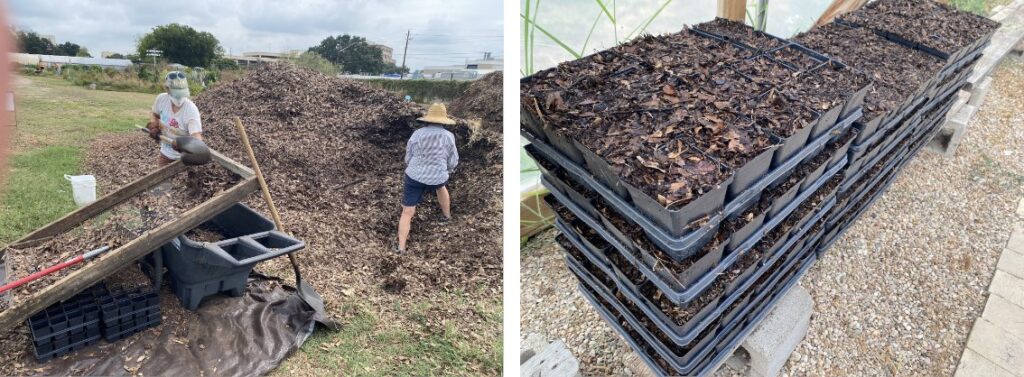
Last weekend, Mary, Rachel and Scott of the Sustainability Workgroup prepared 260 pre-filled pots of leaf mold for the plant sale committee. The process took about an hour with three volunteers who mined the vein of leaf mold, prepared flats and sifted directly into them. Setup and cleanup added about a half hour. While 260 4” pots may sound like a lot, for the scale of the plant sale, it is just a test batch compared to the 10,000 plants the committee requires. These staged flats will work well after rewetting in a greenhouse production setting, using plugs or direct sowing, but may require a pinch of sand on the top to direct-sow ultra-fine seeds like oregano.
The Sustainability Workgroup offered this batch in the spirit of Sunshine plant sales past, but also as an alternative to the costly commercial peat-based mix, which has performed poorly in recent years. We look forward to hearing about their test results!
If you are interested in working on Sustainability Workgroup projects like this, please let us know.
September 2026 Donations to Micah 6 Food Pantry
by Walter Kuhl
October 1, 2026
September Donations / 2026 Cumulative Total
- Sunshine Produce — 167.0 lbs / 2727.25 lbs
- Purchased Dry Goods & Produce — 96.5 lbs / 589 lbs
Donations of fresh produce (from your garden or purchased) may be left in the cool room (south end of the trailer) or in the trailer refrigerator. Please bag and refrigerate items that are best stored cool. Occasionally we have to throw out produce that has been left unrefrigerated for too long. Labels, ties, and a variety of sacks are kept in the cool room for your convenience. Labeling produce, especially if it is not a common vegetable, is helpful to both the food pantry staff and clients.
-Non-perishable food items.
- Canned meats such as tuna and stew (pop-up tops preferred)
- Canned vegetables and soup
- Dry beans and rice
- Healthy cereals
- Peanut butter
- Packaged milk and juice that requires no refrigeration
Garden Education by Ila Falvey
October 1, 2026
The best thing to put on your garden is your shadow – especially so to check on your transplants and seeds as they have to be watered frequently.
Speaking of transplants, the Squeaky Frog Farm transplant sales continue. Check out their website for plant availability, location, and dates.
Reminder: Fall Plant Sale for Gardeners
September 24, 2026
The transplant sale for Sunshine gardeners will be this Saturday, September 26th at 8am, featuring plants grown by Squeaky Frog Farm.
The plant list for the sale is available on the Sunshine Gardens website:
Join the Sunshine Sustainability Workgroup!
by Scott Morris
September 24, 2026
Working in a community garden is a great way to make a meaningful impact on our environment, and it’s why many of us are here. Here’s a chance to get organized, get hands-on helping our planet and to work with other Sunshine gardeners who feel the same. At the August 11th board meeting, the CGICT Board approved the formation of the Sustainability Workgroup:
- Authorize the formation of a Sustainability Workgroup, an open, self-organizing and self-directed group of members to make monthly progress reports to the board, to monitor, measure and report the environmental impact of the site, and to conduct research into the feasibility of a new composting program, publishing a report with recommendations by May 1, 2027.
Since then, we’ve been developing the landscaper registration and chop and drop programs, measuring and reporting on the size and condition of the leaf, wood chip and compostables piles, creating new signs for the composting area and designing the protocol for a large-scale composting feasibility study that the board funded in its September meeting.
If you are interested in being a part of this important sustainability initiative, please fill out this brief statement of interest. Thank you!
Case of the Missing Basil Plant
by Larry Olsen with Turbo
September 24, 2026
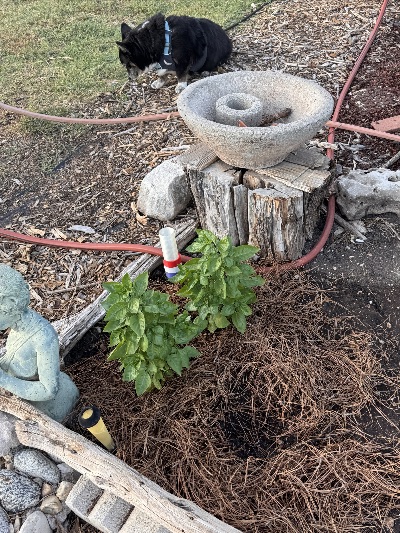
Turbo is at the crime scene, investigating the theft of a basil plant. Where there were once three freshly planted basil plants, there are now only two. We will plant another “third” basil plant—ironically, the one we planned to give away. Clearly, someone was in dire need of basil, but to pull the plant up, roots and all? The theft of any personal property leaves you feeling violated. I am hearing that gardeners are finding produce missing from their gardens. This seems to come in waves, so I suggest being extra vigilant and watching out for each other.
Photo: A Bit of Fall Color
Susan Van Haitsma captured a bit of fall color — Mexican Flame Vine on the first full day of autumn.
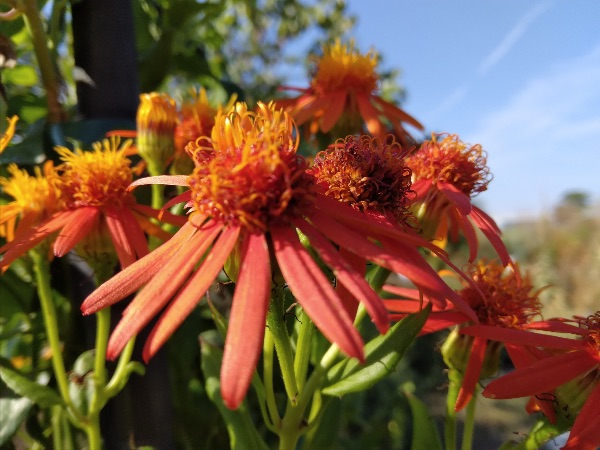
Photo by Susan Van Haitsma
One Gardener's Trash, Another Gardener's Future
by Scott Morris
September 24, 2026
We all love our stuff. For member-managed nonprofits like Sunshine, it may seem that we are the owners-stakeholders of garden stuff. But despite our sweat equity, we hold and use garden property for a public purpose. We are only stewards and caretakers, not owners of that property. It’s here to conduct our mission. Even if an item’s purpose isn’t clear, it may still have value. Discarding or altering an item, even with the best of intentions, may disrupt someone else’s work or the furtherance of our nonprofit’s mission. You may have noticed that “property of” tags are appearing on the back of signs and items. There’s a reason for that. There are a few examples of things that have gone missing over the years.
The most serious involved records lost cleaning out the office trailer several years ago, when we were between executive directors. It was during a time when Sunshine was a program of Austin Community Gardens, a 501(c)(3) nonprofit. Sunshine was always the flagship, but ACG also supported 30 satellite gardens, serving hundreds of low-income and food-insecure persons, mostly in East Austin. A few months after the transition, a new executive director, Terri Buchanan, called me and other former garden leaders to ask where all the records related to grant funding went. She explained the historic records were needed to apply for grants and new lines of funding. They had likely been discarded in an office cleanup by someone who didn’t realize their value.
Ultimately, losing the funding history made her job and future funding all but impossible and contributed to ACG’s financial incapacity. Sunshine’s parent organization, our organization, Austin Community Gardens, became insolvent within a year of that phone call. It led to impacts that we, and the whole city, are still dealing with. ACG’s loss marked a sharp contraction in Austin’s community garden movement. It led to ACG’s merger with Sustainable Food Center on terms dictated by Sunshine’s need to survive. Most of ACG’s satellite gardens ceased to exist, which impacted hundreds of gardeners who were relying on those gardens for their food. In that merger, the program signed titles to land over to SFC, garden land that had been donated to ACG. In the years after ACG’s demise, Sunshine relied on two fiscal sponsors before we created our own nonprofit. In 2008, the Community Garden Initiative of Central Texas was formed by Sunshine gardeners, and we could stand on our own.
So what does this mean for a grass catching bag for the lawnmower that you’ve never seen anyone use? What does it mean for someone’s beloved chameleon cultivator missing a tine in the tool shed? Err on the side of caution. Whether it’s a tool, a record, or a message on a sign you feel is no longer useful, please consider that it may still be important. Please ask around. Check with a garden leader before throwing something out.
In the case of old and yellowing file folders, one gardener’s trash was another’s future.
Garden Education by Ila Falvey
September 24, 2026
There is a new pile for plant debris. It is clearly marked–please use the new location.
Cauliflower Suggestion
The fall transplant sale for Sunshine Gardeners is this Saturday. Try growing Punto Verde Cauliflower.
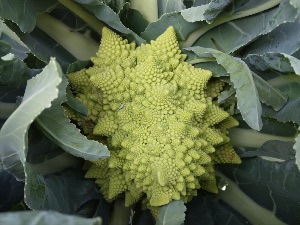
Punto Verde Cauliflower (aka Romanesco) starting to form.
This grew into a very large head weighing several pounds.
The following article may be of interest to Sunshine Gardeners:
Fall All Gardener Meeting – Saturday at 10 am
September 17, 2026
The fall all-gardener meeting is scheduled for this Saturday, September 19th at 10:00 am. Potluck dishes are welcome.
Hope to see you all there!
Meet our Newest Gardeners: Headwaters School
by Elaine Dill
September 17, 2026
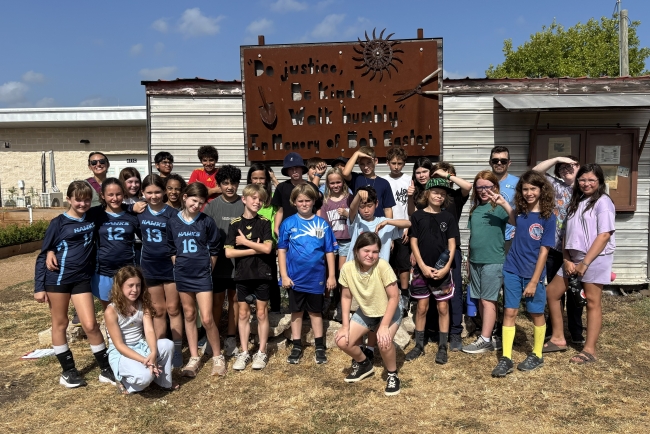
The Headwaters School 6th graders are in the house! The plot that was formerly gardened by Mary Gifford (the one directly in front of the tool shed) will now be tended by the 6th, 7th, and 8th graders from the Headwaters School as they get “on the ground” experience practicing what they learn in their science curriculum.
We toured Sunshine this morning, from Micah 6 to bee houses to chickens–lots of energy and lots of interest in planning and maintaining their own gardening space. We welcome this new generation of gardeners to our community, so if you see them buzzing about their plot, please stop and introduce yourself and welcome them to Sunshine!
Mushroom Blocks Dropped Off
by David Forrest
September 17, 2026
Mushroom blocks from the Central Texas Mycological Society were dropped off earlier this week.
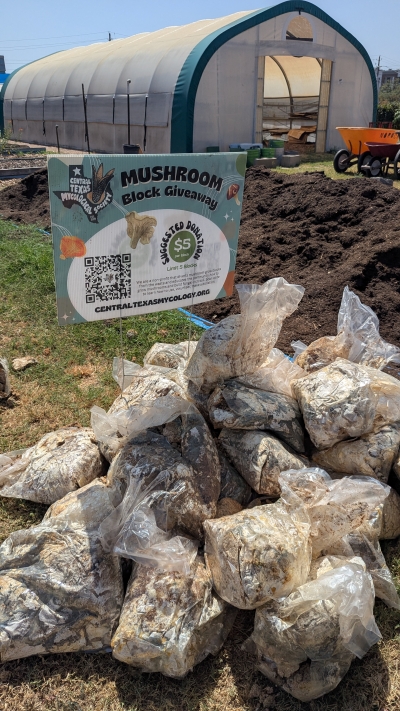
If you don’t know how to use mushroom blocks, watch the videos in the Central Texas Mycological Society’s video series.
They have also provided a link to printable educational materials.
https://drive.google.com/drive/folders/1LdxAvzRewHQbZp_eX3iNyjUbGgk9we2O
September Workday Kicks Off Khaki Weed Suppression Program
by Scott Morris
September 17, 2026
Teams fanned out in pairs to remove khaki weed from 3 roads and 2 large areas. The resulting khaki pile was almost too large for the tarp, over 2 feet high, calculated to be 3.3 cubic yards in volume and roughly 1,750 pounds. With apologies to anyone who we missed, our thanks to the amazing khaki removal team members: Daniel, David, Ellen, Jack, Julian, Katharine, Liz, Mary, Michael, Rachel, Tony and Vicki. Special thanks to those who spiffed up the office trailer for the facilities workgroup, taking on their tasks independently: Jay for pressure washing the outside and Melanie, who ran a shop vac across the ceiling, walls and floors. The Rubbermaid cart handles were repaired and strengthened with epoxy, and new sustainability workgroup signs were prepared and placed around the site. Workday co-leads Jen, Joe, Kay and Polly worked shoulder to shoulder with the volunteers and shared their expertise and encouragement.
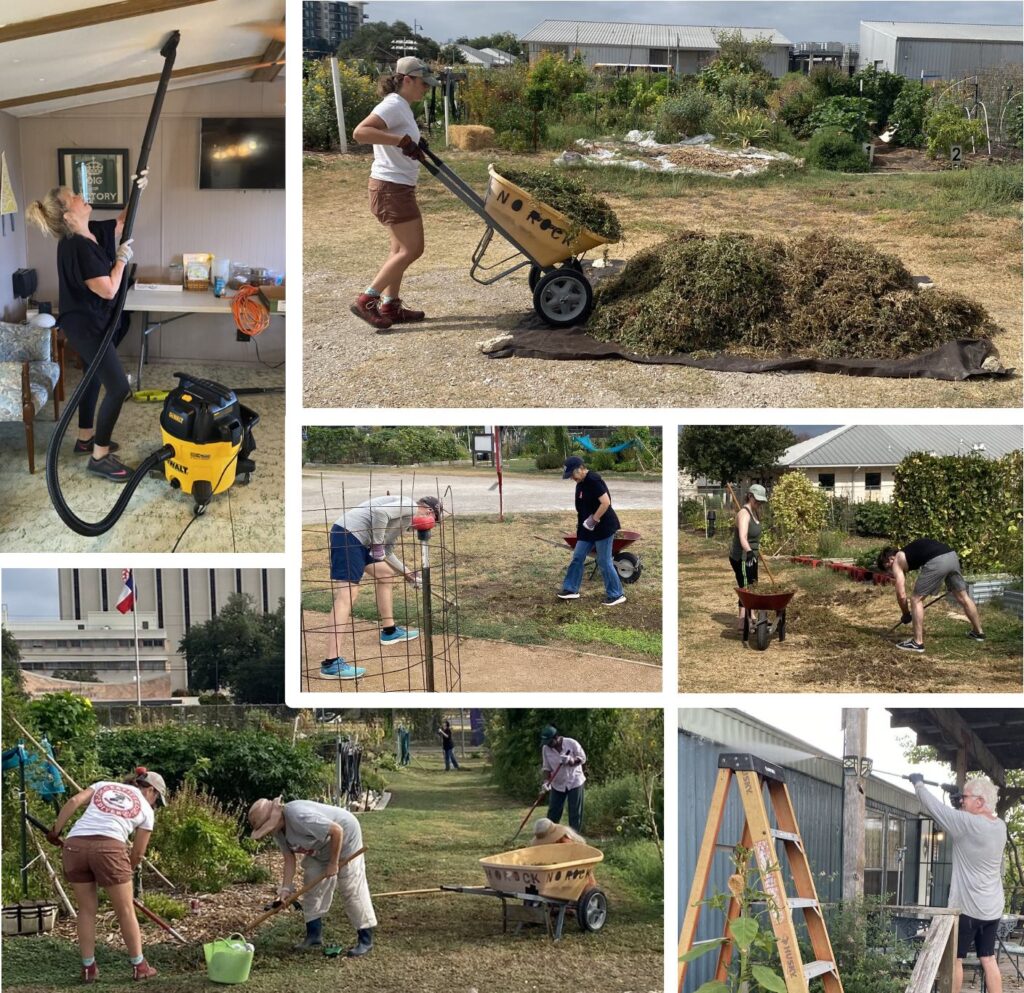
The khaki weed suppression program is a year-long campaign proposed by the groundskeeping workgroup. It is designed to test new techniques to reduce the prevalence of this most unwelcome weed and its seed bundle of hypodermic needles. Khaki removal is an ongoing priority. If you want to support this campaign, please continue where the workday left off and place all khaki weed in the dumpster. The priority is removing top growth and seed and not to focus on the root for now. Remember, khaki weed removal qualifies as your TSBVI service!
September Site Operations Report
by Scott Morris
September 17, 2026
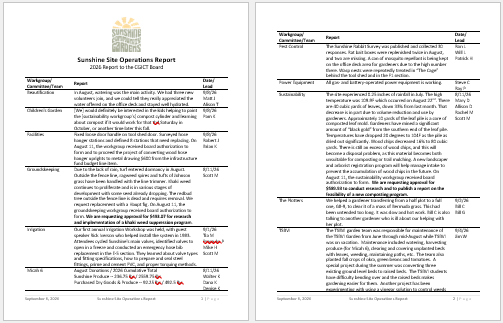
For decades, the Sunshine site was the largest year-round community garden in the United States. Today, it is still among the largest, but two things set us apart: Sunshine’s 43-years of longevity and that our program is entirely member-managed with unpaid volunteers. Sunshine is privileged to have scores of active members who run its operations and make decisions day in and day out. Thirty-two site-specific operational areas have been identified, and more are being defined each month. The September Sunshine Site Operations Report contains brief summaries across several of those, written by the members, team leads and committee chairs closest to the work.
Garden Education by Ila Falvey
September 17, 2026
When to Harvest Sweet Potatoes
Quite a few gardeners at Sunshine are growing sweet potatoes.
An important question is when to harvest them? 🤔
This video should provide some guidance.
https://www.youtube.com/watch?v=URth92AjEDU&t=24s
Sunny's Workday
Saturday, September 12th 8-11 a.m.
by Sunny
September 12, 2026

Alright humans, grooming those infernal khaki weed stickers out of my pads is a major time commitment that I can no longer countenance. The new Groundskeeping Workgroup needs a few hands for a sitewide khaki weed suppression project. There is a race to remove just the plant tops that have already begun dropping millions of seeds for next year’s khaki crop, and I hear khaki removal counts as TSBVI service hours. The Facilities Workgroup needs help pressure-washing the office trailer and outside furniture, and vacuuming out the office trailer and tool shed. Mowing and line trimming to take out ragweed, removing a dead redbud and putting together signs are also on tap. There’s something for everyone. I’ve been told light refreshments and an all-you-can-eat seafood buffet will be provided.
One last thing. Could you people do something about the fox already?
Director and Zone Coordinator Openings
by Lauren Ames
September 12, 2026
Notice of Director Resignation and Call for New Candidates
Our recently elected director, Walter Kuhl, has resigned his office to focus on organizing and supporting the Micah 6 gardeners. As a result, the Board will appoint an interim director to fill his position in the next month and will be calling a new election for a candidate to fill the remainder of his term as soon as the Nominating Committee is able to identify candidates. If you are interested in being appointed in an interim capacity to the director position until the election can be held, please email Elaine Dill or contact any member of the board.
Opening for Zone 1 Coordinator
We also have an opening for a volunteer zone coordinator for Zone 1 of the garden. Please email Lauren Ames or contact any member of the board if you are interested in serving! Zone coordinators are vital to keeping the garden running smoothly and it’s a great opportunity to get more involved.
Board Launches Strategic Planning Process
by Scott Morris
September 12, 2026
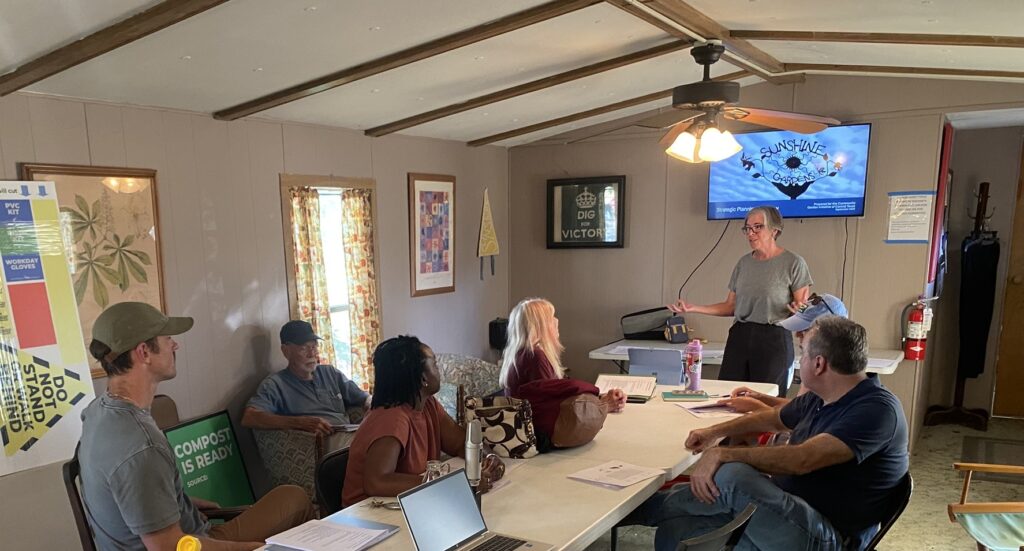
Tuesday night’s board agenda was full and contained several initiatives. Fellow Sunshine gardener Caroline Alexander delivered a strategic planning presentation, and the board formed an exploratory committee to begin that process. The board moved forward with an authorization to partner with Headwaters School and funded a composting feasibility study. Director At-Large Walter Kuhl’s resignation was announced, and the board asked the nominating committee to begin identifying candidates to fill the vacancy, recommending the same recruiting process that was used in the spring. The board discussed a new front entrance sign and provided design feedback. Attendees learned the results of an ongoing rabbit damage survey, and the board approved a rabbit exclusion project around the tool shed. The final results of the survey will be presented at the September 19th All-Gardeners meeting and members will vote on next steps in the rabbit damage abatement process. Funding for a khaki weed suppression project was postponed for a board email vote.
Fall Plant Sale for Sunshine Gardeners Only
by David Forrest
September 12, 2026
Time: 8am – Noon
Grower: Squeaky Frog Farm
Location: Sunshine Greenhouse Area
Reminder: Fall All Gardener Meeting
Saturday, September 19th, 10:00 am
The Fall All-Gardener meeting has been set for Saturday, September 19th at 10:00 am. The agenda will be published several days ahead of the meeting.
Potluck dishes are welcome. Hope to see you all there!
by Elaine Dill
Opportunities for Volunteer Hours
by Lauren Ames
September 12, 2026
If you need to complete service hours, there are many opportunities at the garden!
- Weed and maintain paths by pulling up Bermuda grass and laying in new woodchips.
- If you have gone through mowing instructions with Steve Camp, Ray Porter, or another authorized person, areas inside the gardens may need mowing.
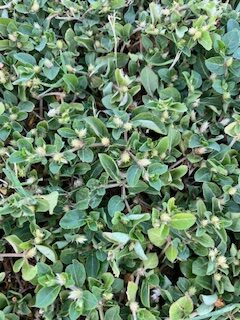
- Khaki weed is pervasive at Sunshine (see photo) and should be pulled up — use gloves because it’s prickly!
It’s hot out there so drink lots of water and take care of yourself first and foremost.
–Submitted by Lauren Ames
Editor’s Note: If you want more guidance about khaki weed removal, here is a video that was featured in Ila’s Garden Education column recently. It was recorded and edited by Yang Zhang and is available to view on his YouTube channel:
Going, Going, Gone…
by Scott Morris
September 12, 2026
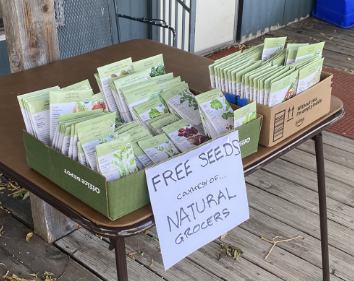
Natural Grocers donated 275 seed packets to Sunshine last week. They were placed out on the office trailer deck and were almost completely claimed by gardeners within 48 hours over the Labor Day weekend! Many thanks to the Natural Grocers team, Ansie and Razzy, for their generous support. When you visit the store, please say hello and thank you on behalf of all Sunshine gardeners!
Garden Education by Ila Falvey
September 12, 2026
Austin Area Gardeners Meeting
Fall All Gardener Meeting
Saturday, September 19th, 10:00 am
The fall all-gardener meeting has been set for Saturday, September 19th at 10:00 am. The agenda will be published several days ahead of the meeting.
Potluck dishes are welcome. Hope to see you all there!
Sunshine Board Meeting
Tuesday, September 8th at 5:30 pm
The next regular board meeting will be held on Tuesday, September 8th, with a new starting time of 5:30 pm. The agenda will be published by Monday preceding the meeting. Gardeners are welcome to attend.
Sunshine Rabbit Survey
The Sunshine Board is asking for gardener input to gather information on your experience with wildlife at the garden. Please respond to this survey within the next week and the results will be discussed at the next All Gardener Meeting.
Survey: https://forms.gle/7WZajEFhCtMSMdBg9
Thank you for your participation!
Sunshine: Empty Field to Community Garden in Two Weeks
by Scott Morris
September 3, 2026
Last Saturday, we invited Rick Iverson to speak before the irrigation workshop. He was part of a team of volunteers who developed the Sunshine site in the fall of 1983. Basically, a garden relocation, Sunshine came about because another site closed for development at the present-day Winters Building location a few blocks to the east.
That conversation with Rick led to an hour-long phone call on Sunday with Eleanor McKinney, then program director for Austin Community Gardens, who orchestrated the move. Eleanor was about 5 years out of college, with a degree in botany, and dealt with local officials at the highest level. She became highly effective at it. Leading the policy effort, Eleanor skillfully lobbied and obtained commitments from policymakers in city, state and county government to find a new home.
We’re learning more with each conversation, but what’s coming into focus is astounding. The Sunshine site essentially went from an empty 6-acre field to a fully operational, world-class community garden in two weeks. Rick jokingly corrected us a few times, saying the project took two weekends, not two weeks, as most of the dozen or so volunteers had day jobs.
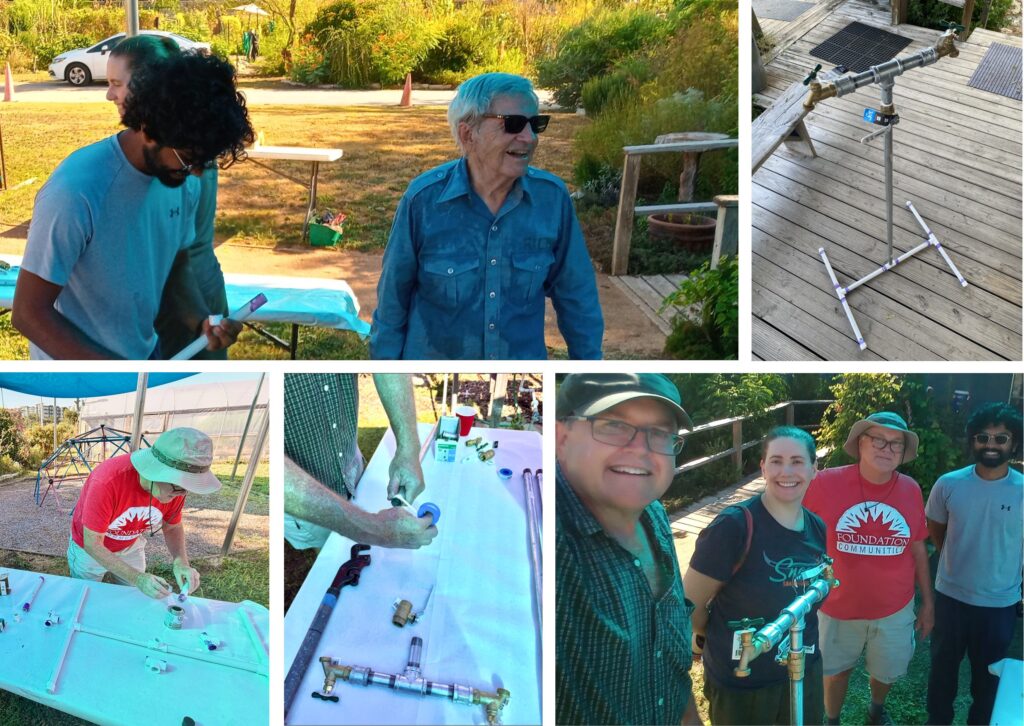
Team members were all very young, but they had energy, camaraderie, hope and the belief that it could be done. Equipment known by its brand as a Ditch Witch, basically a chainsaw for dirt on tracks, was operated by Sunshine gardener Victor Von Zur Muehlen and made fast work of the trenching. The organization had little to no money. Rick purchased the supplies out of pocket. Despite modestly assuring us that PVC was cheap, it was still almost a mile of pipe plus 5 big shut-off valves. Women on the team primed and glued most of the pipe. The risers from the Winters site were saved, stored and brought to Sunshine, along with our present-day tool shed. Gardener Blake Mitchell, a local restaurateur and developer, donated that and the office trailer.
They made it look easy, but the move was traumatic and uncertain. There was a 2 ½ month-long gap between the Winters site closing and Sunshine opening. On the day Sunshine opened, after the last dirt was pushed back into the last trench, the six-acre site immediately filled with gardeners. That was Sunshine Day One, and it’s been 15,600 days since.
The Workshop Commences
After the talk, Rick stayed for the workshop to share his technical guidance and anecdotes. Attendees Tia, Pramuka and Mike participated in several technical exercises related to the irrigation system. In the field, the team cycled Sunshine’s main valves to the water system, identified which risers to drain and vent it in a freeze and conducted an emergency hose bib replacement in the E-5 section. Back at the workshop, they learned about valve types and fitting specifications, how to prepare and seal steel fittings, prime and cement PVC, and proper torquing methods to build a complete irrigation riser. Their model will be on display for a few weeks on the office deck, so please take a look.
Check out this time-lapse of the irrigation workshop and these videos taken by Tia:
Hose bib replacement segment 1
Hose bib replacement segment 2
Hose bib replacement segment 3
Hose bib replacement segment 4
One of this organization’s highest purposes is to disseminate knowledge to ensure the smooth functioning of the garden now and into the future. We have also captured specific site-development techniques, and this can now be shared with others.
Beyond acquiring operational knowledge, Tia’s, Pramuka’s and Mike’s volunteerism embodies the true Spirit of 1983!
August 2026 Donations to Micah 6 Food Pantry
by Walter Kuhl
September 3, 2026
- Sunshine Produce — 236.75 lbs / 2559.75 lbs
- Purchased Dry Goods & Produce — 92.25 lbs / 492.5 lbs
Donations of fresh produce (from your garden or purchased) may be left in the cool room (south end of the trailer) or in the trailer refrigerator. Please bag and refrigerate items that are best stored cool. Occasionally we have to throw out produce that has been left unrefrigerated for too long. Labels, ties, and a variety of sacks are kept in the cool room for your convenience. Labeling produce, especially if it is not a common vegetable, is helpful to both the food pantry staff and clients.
– Non-perishable food items.
- Canned meats such as tuna and stew (pop-up tops preferred)
- Canned vegetables and soup
- Dry beans and rice
- Healthy cereals
- Peanut butter
- Packaged milk and juice that requires no refrigeration
Garden Education by Ila Falvey
Importance of Compost
September 3, 2026
See The Dirt on Garden Soil article on the rareseeds website for their composting recommendations.
Sunshine is having its Fall transplant sale September 26, starting at 8 am. The transplants are grown by Squeaky Frog Farms.
New: Site Operations at-a-Glance
by Scott Morris
August 28, 2026
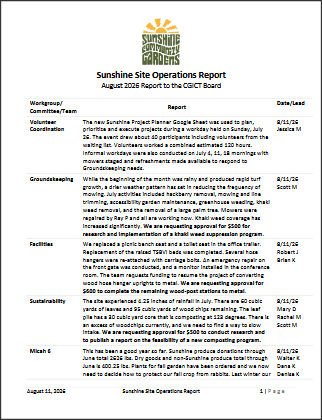
Earlier this month, our CGICT board members received the inaugural edition of a monthly Sunshine Site Operations Report. It contains brief summaries across several operational areas of our 4.2-acre site, written by the members, team leads and committee chairs closest to the work. These reports also provide transparency, a look under the hood, and a basis for future training and documenting processes. They are hoped to serve as an at-a-glance operational dashboard, a place to identify emergent issues and needs, a recruiting tool to broaden participation, and a running log of operational history for each site-specific workgroup, team or committee. Enjoy!
An Early Morning Datura Blossom
a black and white photo of one of Jen’s many Datura blossoms
in the early morning sun

— Photo by Susan Van Haitsma
Sunshine Irrigation Workshop
Saturday, August 29th 8-10 am
by Scott Morris
August 20, 2026
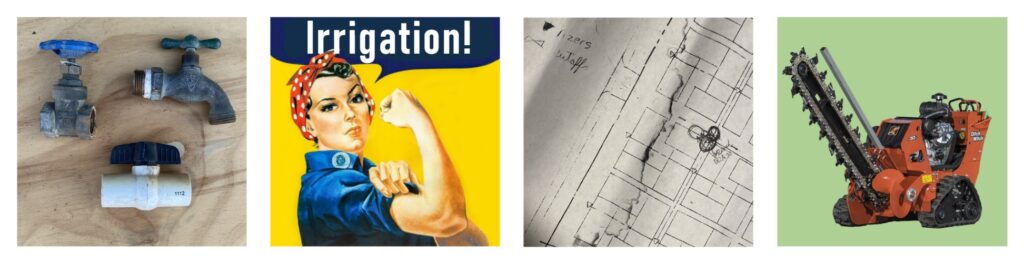
It’s something we take for granted every day, but have you ever wondered about the origins of Sunshine’s irrigation system? Have you had a leaky hose bib valve that’s annoyed you for months on end?
This workshop is for anyone who is irrigation-curious over this amazing 43-year-old underground system, how to maintain its above-ground fixtures, and how to shut it off in an emergency or impending hard freeze. Learn the differences between valve types, the fittings and methods of connection between brass, galvanized steel and PVC. We’ll have light refreshments and coffee, and a guest speaker from the original crew who installed our system in 1983! The workshop is open to any Sunshine gardener, but seats are limited, so please reserve your spot here for this important event.
Sunshine/CGICT Attends Supercharged ACGA Conference
by Scott Morris
August 20, 2026
- Members will follow rules that they had a hand in creating.
- There is no good reason to do hard work alone.
- No community garden should have a waiting list.
- Our garden got an FSA farm number, applied for an award, and it paid for the new greenhouse.
- A used shipping container makes an ideal, secure and instant tool shed.
- We drive a walk-through gooseneck trailer store into food deserts, stocked with food we grow.
- We sell produce at a farm stand at our garden year-round.
- Neighbors exchange a bucket of their kitchen waste for a bucket of our finished compost.
But the experience was also incredibly humbling. Most community gardens are struggling to feed people with a fraction of Sunshine’s resources. The host state, Arkansas, has the highest food insecurity rate in the country. 19% of the population, at some time in the month, does not know where the next meal will come from. In seven counties, the rate is 24%. Texas comes in at a close second in food insecurity. We can do more to help food-insecure and low-income populations in the Austin and Central Texas area.
Overall, the conference engendered excellence in nonprofit service and projected an overwhelmingly optimistic vision about the future of the community garden movement. The ideas shared serve as a catalyst for transformation and reinvention for our own site. When I reported to the board after the trip, I strongly recommended that they find a way to sponsor any director who wishes to attend the next ACGA conference in Los Angeles. If a group trip comes up in budget discussions this fall, I ask members to support this expense as an investment in organizational knowledge.
To read more about my conversations, workshops and talks, read my full ACGA Conference Report – June 9, 2026, and check out the ACGA website to learn about the work of this important organization.
Have you noticed how garden friends start looking alike?
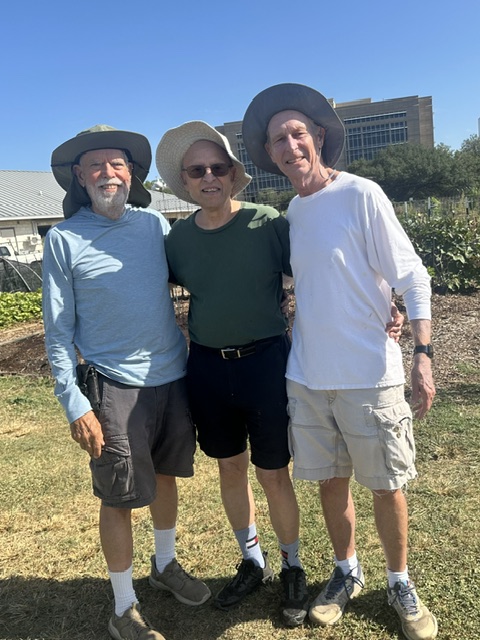
— Photo from Walter Kuhl
All Blind Children of Texas Fundraiser
Friday, September 25 – 6:00 – 9:00 pm

ABCTX Fundraiser website: https://abctx.org/fallfundraiser/
Garden Education by Ila Falvey
August 20, 2026
Are vine-ripe tomatoes a scam?
There is interesting information in an America’s Test Kitchen science article about tomatoes in the supermarket that are labeled “vine-ripened.”
Now that we have to depend on other sources for tomatoes, this article provides some insights.
Sunshine/CGICT Board Meeting Highlights
by Scott Morris
August 14, 2026
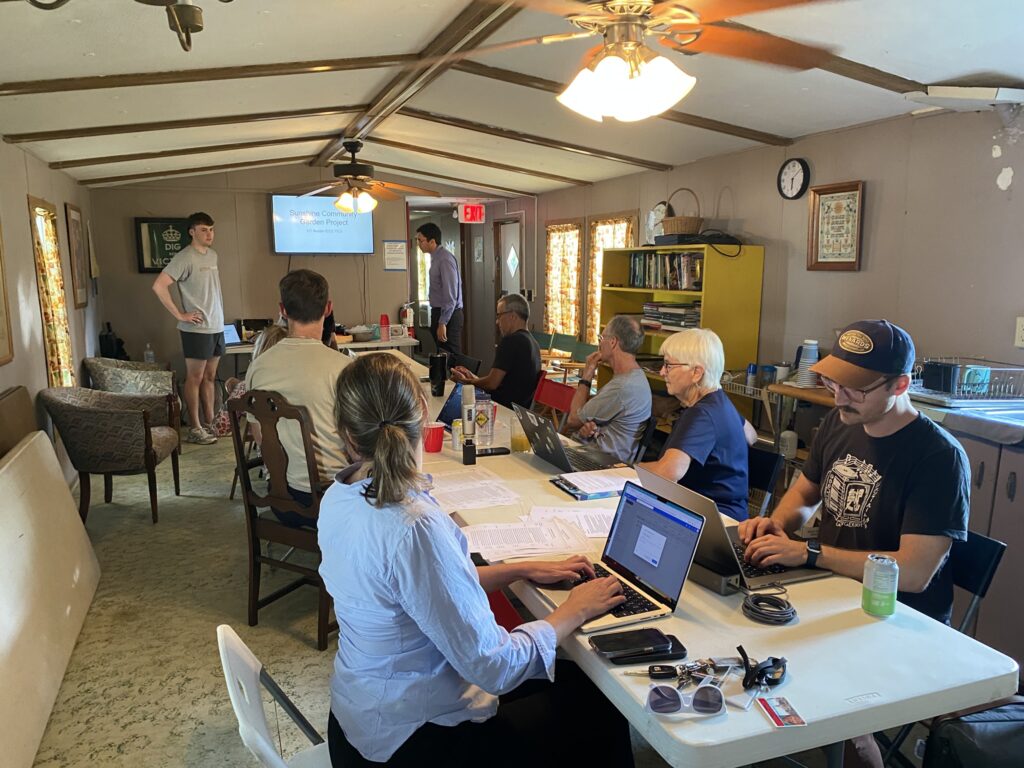
The world faces many problems today, but Sunshine has always been a place where friends gather to do good work. The board meeting last Tuesday was no exception. Attendees welcomed representatives from the UT chapters of the Institute of Electrical and Electronics Engineers and the National Electrical Engineering Organization to learn about their agrivoltaics project. The board appointed Doug Zullo as assistant treasurer, and it also created and charged a new audit committee, appointing Tiffany Ondracek, Michael Hanlon, Corinne Hughes and Stan Babbitt. The board authorized the formation of the Facilities, Groundskeeping and Sustainability Workgroups for the Sunshine site. It requested that the Facilities Workgroup proceed with hose station replacement, Groundskeeping Workgroup research and develop a khaki weed suppression program and the Sustainability Workgroup study the feasibility of a new composting program. Team leads and committee chairs from across the site sent the board updates in the inaugural monthly Sunshine Operations Report. There will be a myriad of service activities this fall, and many options for getting involved.
6 Word Prose and Photo: Passionflower
August 14, 2026
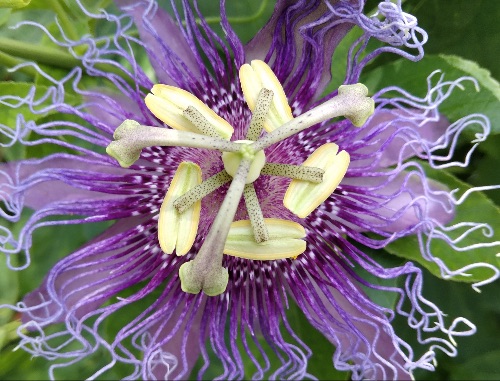
Photo by Susan Van Haitsma
Dave’s corner passion
Our good fortune
–Susan Van Haitsma
A poem inspired by William Shakespeare with soil amendments provided by Ron Lucey
August 14, 2026
But soft! What fruit through yonder foliage breaks?
It is the east, and Juliet is the tomato.
Arise, fair grape, upon thy vigorous vine,
and shame the common cherries,
who already hang pale with envy.
O Roma, Roma! Wherefore art thou Roma?
Deny thy paste, refuse thy determinate habit;
or, if thou wilt not, be but sworn my love,
and I shall leave my cluster.
‘Tis but thy variety that is my enemy.
Thou art thyself, though firm and thick of flesh.
What’s Roma? It is neither leaf nor stem,
nor blossom, cage, nor any garden part.
O, be some other fruit!
What’s in a name? That which we call manure,
by any other word would smell as rank.
So Roma would, were he not Roma called,
retain that dense and meaty flesh
which makes him fit for sauce.
Yet I grow on—indeterminate—
sweet, prolific, and resistant to cracking,
while thou, compact and practical,
ripenest all at once.
Thus are we star-crossed lovers:
I, destined for the salad bowl;
thou, for the saucepan—
both planted deep
in warm amendments
the seed catalog called “organic matter,”
but which the gardener knew
was bull manure.
–Ron Lucey
Submit your own garden- or nature-themed literary creation to the Weekly Weeder.
Rugosa Squash
by Ila Falvey
August 14, 2026
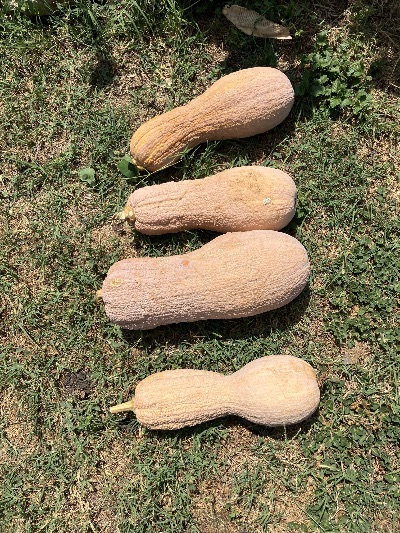
One of the advantages of being a gardener at a community garden is the exchange of information. Also, an advantage is growing produce that is difficult to buy commercially. An example of this is a variety of butternut squash–Rugosa squash. It takes about 120 days to mature, but it is worth the wait.
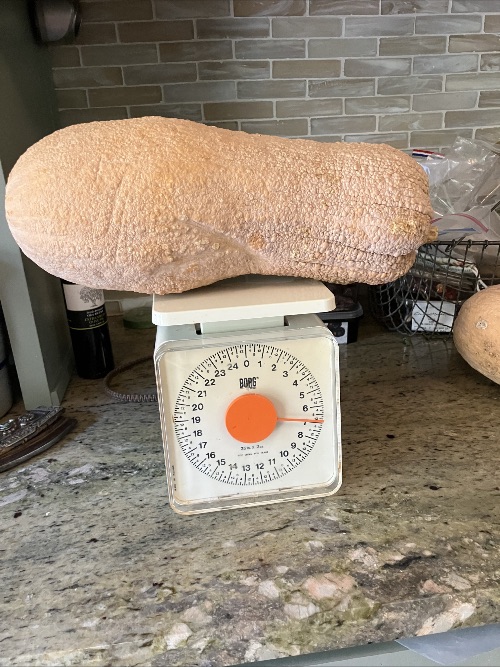
This squash weighs seven pounds, about the same as a newborn baby. Photo by Ila Falvey.
Read about this remarkable squash: Violina Di Rugosa at Specialty Produce
Volunteer for Picking up Mushroom Blocks
by Ila Falvey
August 14, 2026
Is anyone from Sunshine (with a truck, time, and interest) willing to pick up mushroom blocks for Sunshine?
Central Texas Mycological Society has a program to collect blocks from local farms that would otherwise end up in landfills. Read more about it and/or schedule a pick up time here:
https://www.centraltexasmycology.org/volunteer?ss_source=sscampaigns&ss_email_id=6a7b1997b2fc1d497d829b74
Hot Black Gold in the Leaf Pile!
by Scott Morris
August 6, 2026
For the first time in years, the leaf pile is composting. Moisture from frequent rains and a bit of aeration from the tractor operators grooming it a few weeks ago triggered the process. Compost generated from leaves, also known as leaf mold, is a clean, balanced, living soil amendment that results from a lower-temperature fungal process. It boosts organic matter, improving moisture retention and feeding bacteria essential for nutrient availability and soil health. Leaf mold can be worked directly into soil from the pile, used as a top dressing mulch, or as a seed starting medium if sifted through a ½” mesh. It has almost no inorganics, so most of it will ultimately gas off. Newer leaves added to the northern end of the windrow are drier and not active, so you’ll have better results mining dense material from the southern end. Please keep the pile as neat as possible as you remove the dry capping material.
The compost core is estimated to be about 30 cubic yards in size, about half of the 60 cubic yards of leaves measured on August 4th. Midline temperature readings at a height of four feet were recorded as high as 123 degrees. The temperatures closer to the ground were lower, likely due to more anaerobic conditions caused by the weight of the material above it. Most of the leaves are from the live oak leaf drop in March. Brought to our site by landscapers, leaf windrows have been a part of the site’s landfill diversion and large-scale composting program begun over 40 years ago.
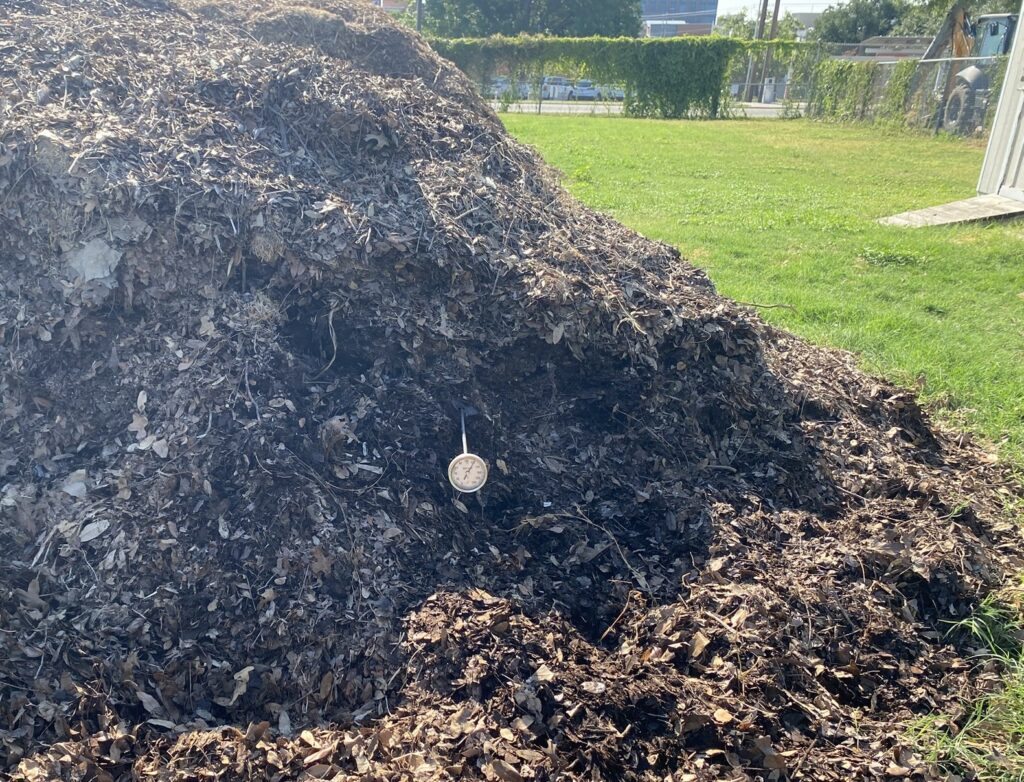
While the extra rain this season has caused everyone countless hours of additional site and plot maintenance, it’s great that it delivered the unexpected reward of 15 tons of free compost!
Recognizing Two More Raised Bed Area Weeders
by Ila Falvey
August 6, 2026
Last week the husband-and-wife team of Lisa Taylor and Mark Zagorin worked diligently for several hours pulling weeds out of the raised bed area. Thank you, Lisa and Mark, for your efforts on this task.
How to Remove Khaki Weed
by Ila Falvey
August 6, 2026
Khaki weed (Altenanthera pungens) is the plant kingdom’s version of the fire ant.It is a noxious perennial weed with prickly burrs (seeds) that stick to everything. It is a relative newcomer to Austin, and it has managed to spread very aggressively. Sunshine gardeners have been battling it for several years and losing the battle. But gardeners are as resilient as khaki weed and the battle continues.
Now is the ideal time to pull out weed khaki weed. The burrs are very obvious so the plant can be identified easily especially in areas that haven’t been mowed.
The goal is to contain the seeds and dispose of them to reduce the spread. Removal of the plant properly will help accomplish this. Also, note that removing Khaki weed counts as TSBVI hours.
This video will aid you in this task. It was recorded and edited by Yang Zhang, features Yang and Vanessa, and was “directed” by Ila.
Here goes your text … Select any part of your text to access the formatting toolbar.
Groundskeeping Workday Report
August 1, 2026
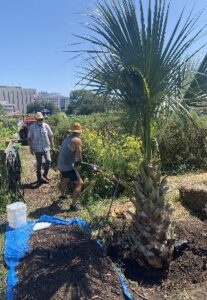
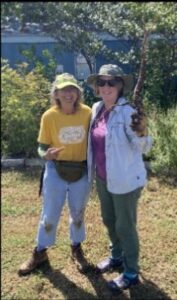
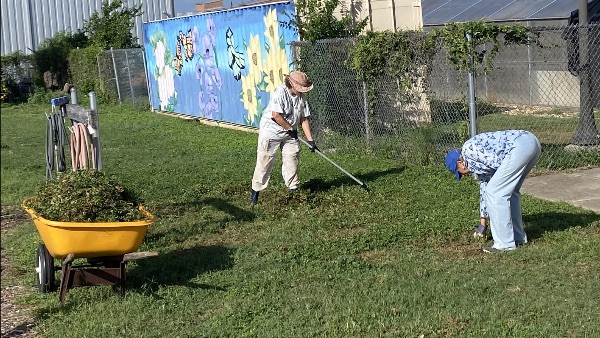
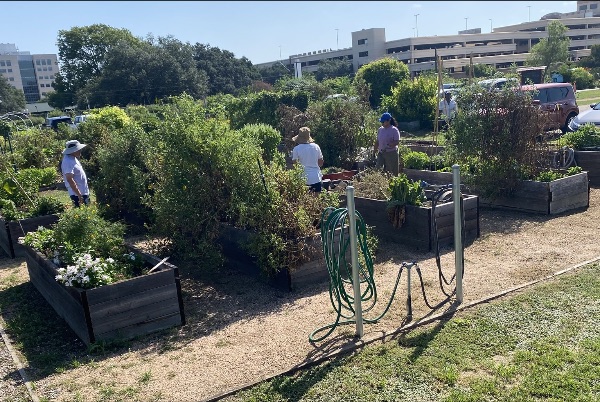
Volunteers from the waiting list joined Sunshine members to work on site maintenance Sunday morning. Among the projects were hackberry removal, mowing and line trimming, accessibility garden maintenance, greenhouse weeding, khaki weed removal, hose hanger maintenance and the removal of a large palm tree. We don’t have the names of everyone who helped, but lending a hand were Lexie, Ryan, Doug, Steve, Jen, Laura, Stan, Elaine, Jessica, Katherine, Kay, Aneka, Mary, Bob, Sam, Sarah, Scott, Vicky, Vic, David, Withanage, Lauren, and a pair of Lisas, Rachels and Susans. Thanks also go to Ray for mower repair for this event, Randy for knocking out a lot of mowing earlier in the week, Brian for taking on projects later this week, and to the Beautification Committee, Matt and Allison, and Ila and Yeong, who shared their time slots and provided support and encouragement to the volunteers.
What's Happening in the Tomato Trial Garden
In early 2011, during a discussion between Don Freeman, Randy Thompson, Jim Willmann, and me on the best varieties of tomato plants to grow in Central Texas, the idea of the Tomato Trial Garden was generated. To determine the best varieties, we decided to grow different varieties in the plot near the entrance to Sunshine Community Garden (SCG) Four plants of eight varieties, for a total of 32 plants, would be grown each spring. The number of harvested tomatoes for each variety by the date harvested is recorded.
Since 2011, 104 tomato varieties have been grown during the 16 years. Thirteen varieties have been grown more than once. Two popular varieties at SCG are Celebrity and Cherokee Purple, Celebrity has been grown nine times. The average yield for Celebrity is 42 tomatoes per plant. Cherokee Purple has been grown twice. The average number of tomatoes harvested per plant was 17.
The varieties grown in Spring of 2026 and the average number of tomatoes harvested per plant are shown below. The harvest from Bloody Butcher was astonishing, 181 tomatoes per plant.
The harvest from Money Maker was also noteworthy, 117 tomatoes per plant. The harvest from San Marzano was disappointing, only 6 tomatoes per plant.
Bloody Butcher – 181
Celebrity Plus – 60
Eva Purple Ball – 21
Money Maker – 117
Purple Boy Hybrid – 93
San Marzano – 6
Thorburn’s Terra Cotta – 66
During the past 16 years, 19 varieties grown in the trial garden have yielded 60 tomatoes or more per plant. These 19 varieties include five varieties grown in 2026.
These 19 varieties are: Amish Gold, Ancienne Belge, Arkansas Traveler, Bloody Butcher, Celebrity, Celebrity Plus, Champion II, Cream Sausage, Early Girl, Flamme, Garden Gem, Jamaican Ghana, Lemon Boy, Money Maker, New Girl, Purple Boy Hybrid, Stupice, Thorburn’s Terra Cotta, and Viva Italian.
Like Bloody Butcher and Money Maker grown this year, five varieties (Amish Gold, Early Girl, Garden Gem, Stupice, and Viva Italian) noted above yielded an astounding number of tomatoes, over 100 tomatoes per plant. Amish Gold has been the most productive of the varieties. The number of harvested tomatoes was 201 per plant.
Tomatoes from the tomato trial garden are donated to Micah 6 or other food pantries. Since 2011, over 17,400 tomatoes have been harvested.
— Submitted by Jeff Taylor
Editor’s Note: Last week we published an early draft of this article instead of this version. We apologize for the error.
Protecting Pollinators
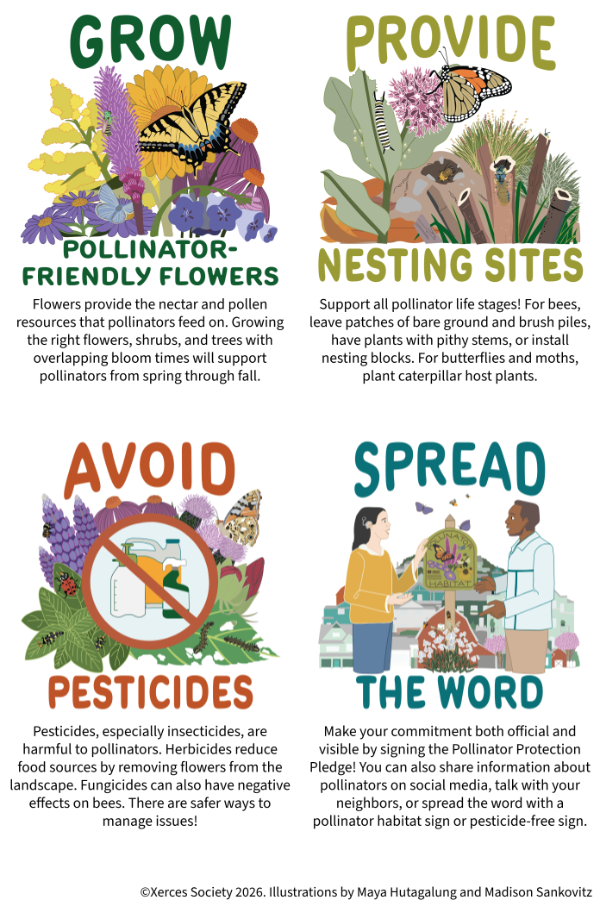
The Xerces Society granted us permission to publish this lovely color graphic with helpful tips about protecting pollinators.
July 2026 Donations to the Micah 6 Food Pantry
August 1, 2026
July Donations / 2026 Cumulative Total
Sunshine Produce — 514 lbs / 2626 lbs
Purchased Dry Goods & Produce — 16.5 lbs / 400.25 lbs
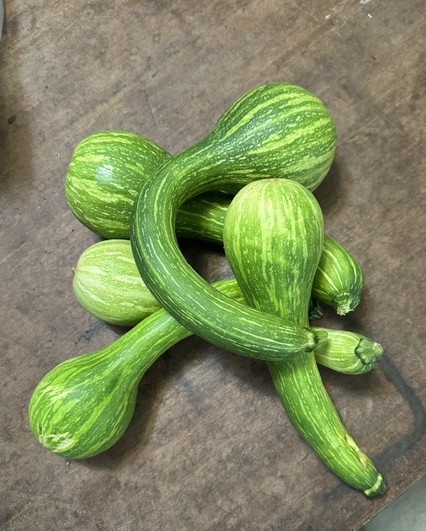
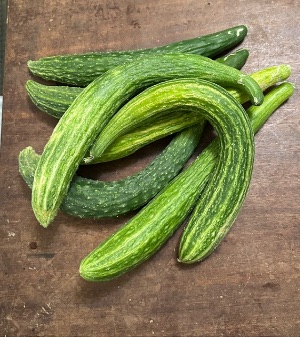
July was a good month for the food pantry. As predicted, our outstanding tomato crop dwindled, but lots of other spring/summer vegetables continued to be donated. One fun part of organizing produce donations is seeing the variety of produce donated by Sunshine gardeners. See the photo of the Armenian cucumbers donated by a generous gardener. Armenian cucumbers are such an interesting and delicious vegetable, and these cucumbers are perfect! I was so happy to see them, and of more importance, I’m sure several food pantry clients were also happy to see these cucumbers.
Think of Micah 6 when trying to decide what to do with your excess garden bounty.
Fresh Produce Donations:
Donations of fresh produce (from your garden or purchased) may be left in the cool room (south end of the trailer) or in the trailer refrigerator. Please bag and refrigerate items that are best stored cool. Occasionally we have to throw out vegetables that have been left on the cool room table for too long. Labels, ties, and a variety of sacks are kept in the cool room for your convenience. Labeling produce, especially if it is not a common vegetable, is helpful to both the food pantry staff and clients. Thank you for your help!
Purchased Dry Goods Donations:
Please consider donating non-perishable food items. Leave your donations in the cool room at the south end of the trailer.
Non-perishable donation suggestions:
- Canned meats such as tuna and stew (pop-up tops preferred)
- Canned vegetables and soup
- Dry beans and rice
- Healthy cereals
- Peanut butter
- Packaged milk and juice that requires no refrigeration
Deliveries to the food bank are currently once a week — Saturday, around 9am.
Food insecurity is a significant problem for many people in Austin. The Saturday Micah 6 Food Pantry currently serves an average of 120 households per week, which is an increase from past years. Austin is an expensive place to live, especially for families with children. Your generosity is appreciated!
–Submitted by Walter Kuhl
Creative Writing Corner:
A Poem for August
August 1, 2026

August is an old man
August is an old man —
gnarled —
cut off at the knee
Longevity a living corpse
You are here said the wasp
while burrowing in the tree
August is an old man
in the sun, diminished —
blemished, bitten brown
Silent buzzing whisper ticking down
August brought you back
from death —
sticky slime of sugared breath —
Breathe on me.
August is a old man
berated, broken,
emblematic memory
through nature disregarded.
Life is for the living
sings the bee
If I become dust
it’s as if I just departed.
Nothing more,
nothing begun,
nothing ended,
nothing started.
So it is with you, old man.
August had its way with you.
🐝
–Lisa Kiewra
Lisa wrote that her poem was inspired by the garden.
Submit your own garden- or nature-themed literary creation to the Weekly Weeder.
Garden Education by Ila Falvey
August 1, 2026
Heirloom Expo 
This looks like a fabulous event for those of you who might be in the “neighborhood.” (It will be held at the farm for Baker Creek Heirloom Seed Company, in Mansfield, MO. Mansfield is perhaps best known as the location of the Laura Ingalls Wilder Home and Museum, and the annual “Wilder Days” festival will be held just before the Heirloom Expo.)
The 15th National Heirloom Exposition will be held Sunday and Monday, September 27-28, 2026 in Mansfield, MO. Thousands of gardeners and seed savers will gather to celebrate heirloom plants, swap seeds, visit vendors, and tour Pioneer Village. Tickets are $10 per adult, and are good for both days. Free camping is available.
To read more about the exposition:
https://www.rareseeds.com/heirloom-expo
Mushroom Blocks 
Mushroom blocks from Hi-Fi were dropped off last Sunday by Angel from Central Texas Mycological Society.
Great for mulching and if you’re building a new raised garden bed, here’s a lasagna gardening recipe for success:
Help keep 10,000 blocks out of landfill per week. Mycelium blocks are black gold for your soil. They’re the perfect carbon-rich base layer to fill raised beds, improve structure, and feed your soil for years. They are for moisture retention, mulching, nutrient cycling and breaking down woody matter, you can also amend your soil and get it ready for fall planting. They are more carbon rich than nitrogen and 100% organic matter.
Great for mulching and if you’re building a new raised garden bed, here’s a lasagna gardening recipe for success:
 Bottom 6″ = broken-up mushroom blocks (carbon powerhouse)
 Middle 6″ = coffee grounds, grass clippings, or veggie scraps (nitrogen boost)
 Top 6″ = finished compost or topsoil (ready for planting!)
Help spread the spores and also share with your friends and neighbors. You can also—sign up to volunteer! CTMS need hands to process, distribute, and spread the word. Every block diverted is a win for your garden AND the planet.
To volunteer or donate:
https://www.centraltexasmycology.org/donate
–Angel Schatz
Happy Gardening!
Sunshine Groundskeeping Workday
Sunday, July 26, 8-11 a.m.
by Scott Morris
July 23, 2026
“Because there is no good reason to do hard work alone” – Claire Hambrick*
There are a variety of project needs spanning the site, something for everyone. Mowing and line trimming are primary. The most challenging work will be marking and removing scores of hackberry saplings growing in the fence along Sunshine’s 1,900 feet of fence line.
There will be basic refreshments, hearing and vision protection, but please bring gloves, water and sun protection.
Please consider giving one morning to help support those core volunteers who take care of the Sunshine site year-round, day in and day out.
Thank you!
*Claire is the Global Partnership and Outreach Lead for MESA. She presented at the 2026 ACGA Conference last month.
Tomato Trial Garden Results
by Jeff Taylor
July 23, 2026
🍅 🍅 🍅
It’s been just over four months since the plants in the tomato trial garden were planted. We’ve begun removing the plants.
Below are the average number of tomatoes harvested for each variety.
Blood Butcher – 181 tomatoes per plant
Celebrity Plus – 60
Eva Purple Ball – 21
Money Maker – 117
Purple Boy Hybrid – 93
San Marzano – 6
Thorburn’s Terra Cotta – 66
We also grew Goliath Sunny Hybrid. We did not include results for this variety. The tomatoes harvested from these plants were red, not yellow. Some of the tomatoes had a small-pointed tip or nipple on the bottom. The plants were mislabeled or the plants were reverting to the characteristics of one of the parents. My guess is the plants were mislabeled.
Overall, over 2,300 tomatoes were harvested from the 32 tomato plants.
Harvested tomatoes were provided to Micah 6 and a food pantry at Covenant United Methodist Church on Duval Road.
Native Bees and More at Sunshine Gardens
by Dylan Mahood
July 23, 2026
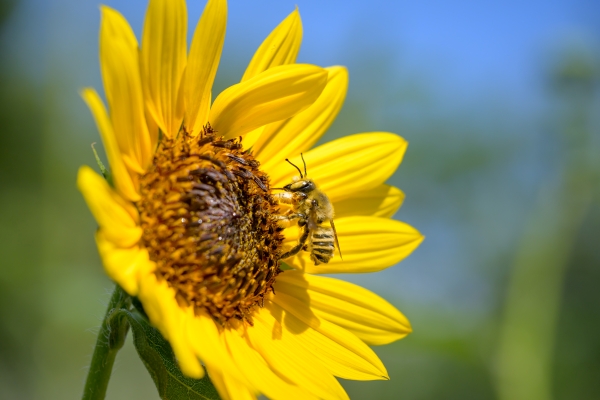
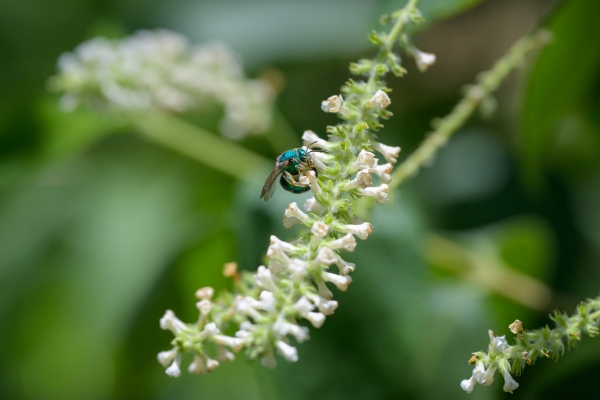
Summer is a great time to see leafcutter bees, bumblebees, and carpenter bees. Here are a few of our latest sightings in at Sunshine Gardens in Central Austin:
Striped Sweat Bee at Sunshine Community Gardens
Genus: Agapostemon
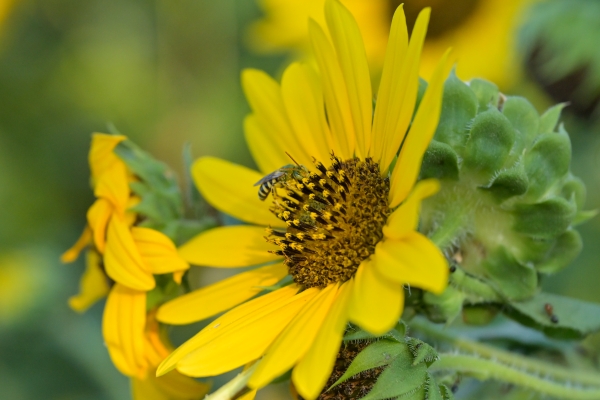
Leafcutter Bee
exact species not identified
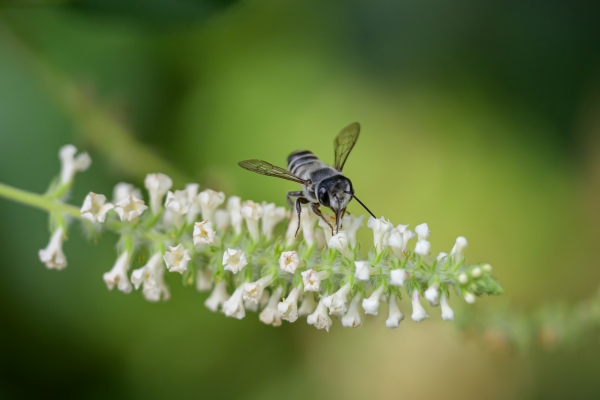
Megachile fortis
a leafcutter bee species
Sweat Bee
exact species not identified
Bee Facts
Did you know that there are no native honey bees in Austin? The non-native European or Western Honey Bee is common, and they compete with our native bee species for pollen. In terms of native species, you’ll see:
Leafcutter bees
Mason bees
Carpenter bees
Bumblebees
Digger bees
And more!
There are around 300 species of native bees, but they’re not super well-documented. If you see a native bee out and about, take a photo and upload it to iNaturalist. That kind of citizen science is really valuable to researchers. Here is a great identification guide for native bees: Texas Bee Identification Guide
Helping Bees
This graphic from the Xerces Society succinctly describes the threats native bees face and how you can help.
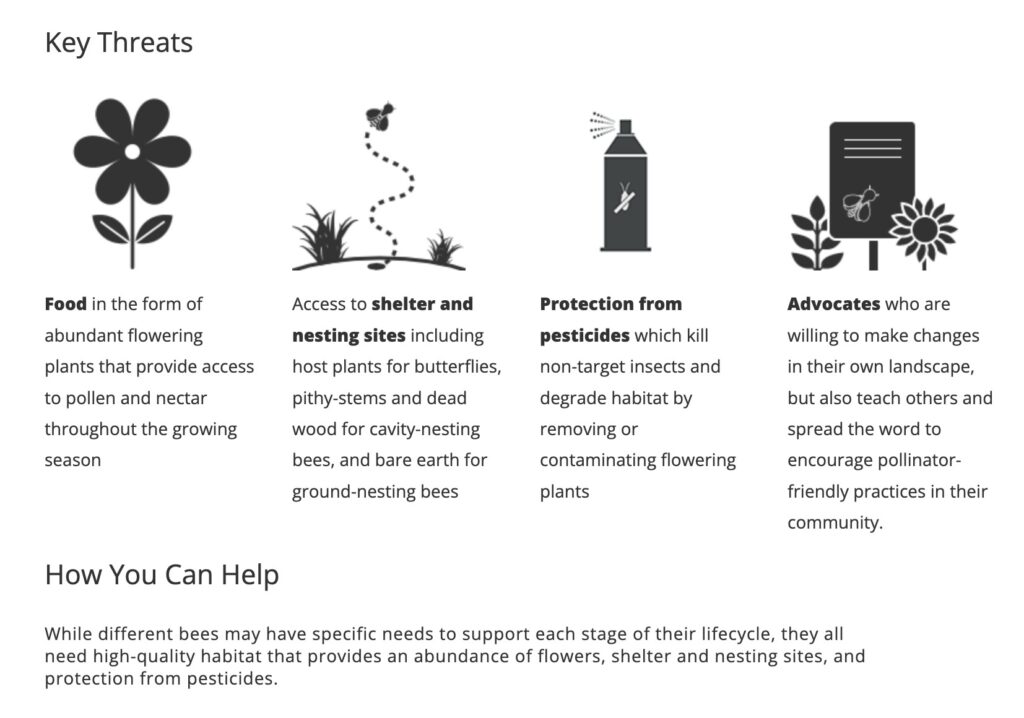
In short:
- Plant native plants when possible. The City of Austin recommends: Turk’s Cap, Mealy Blue Sage, Maxamillion Sunflower, Texas Lantana, Zexmenia, Silverleaf Nightshade, Mexican Plum, and Eastern Redbud.
- Leave some dead plant material (including tall stalks and some leaf litter) and exposed dirt for nesting bees. Bees can’t dig through mulch to build their nests, and they only need a small patch of bare dirt. Many of our native bees are solitary species that nest out in the landscape, using mud or plant material to build nests.
- Don’t hire companies that spray entire yards with pesticides. Bees aren’t just interacting with flowers; pesticides on the ground or non-flowering plants could affect their life cycle too. The Xerces Society has more information on the risks of pesticides to pollinators. Before you hire someone, ask them to confirm what they’re spraying, and give the ingredients a quick search in an insecticides database to see if they might be toxic to bees and other insects.
Bonus Photos
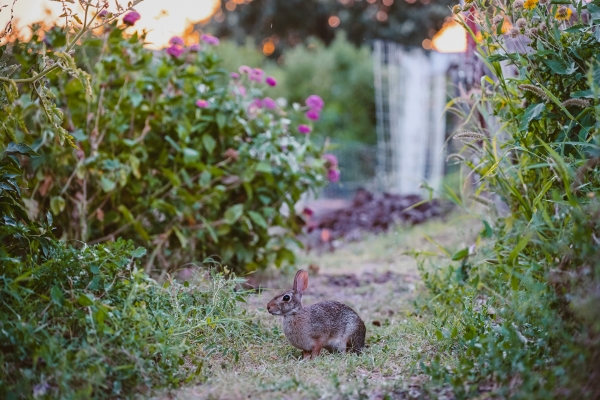
A bunny – just pausing for a photo op
Jessica working on her plot
— The native bee facts, recommendations, resources, and photos were submitted by Dylan Mahood, Jessica’s neighbor. Dylan recently visited Sunshine Garden’s to see Jessica’s garden plot. He took advantage of the opportunity to photograph native bee species (and also bunnies).
Garden Education by Ila Falvey
July 23, 2026
🥔 🧅 🥔 🧅 🥔
Gardeners at Sunshine grow both.
The following “Public Service Announcement” has useful information:
PSA: You’re Storing Your Potatoes and Onions the Wrong Way
Audit Committee Forming:
An Invitation to Members
July 17, 2026
On July 14, 2026 the CGICT board of directors approved the convening of an audit committee for the year ending December 31, 2025. The audit committee performs a vital role in financial oversight, and the board invites you to take part. Under Article 6 (1) (b) of our by-laws, the board appoints members to this standing committee to examine the financial records and issue a report based on their findings. The committee’s specific charge is to audit the organization’s books and records, measure compliance with legal and tax requirements, and review the system of internal controls that is in place. The board requests the committee issue a report with its findings and recommendations in about 3 months. If you are interested in serving the garden in this role, please fill out the Sunshine Audit Committee interest form. Thank you!
— Submitted by the Board of Directors
New Beds for TSBVI Garden
July 17, 2026
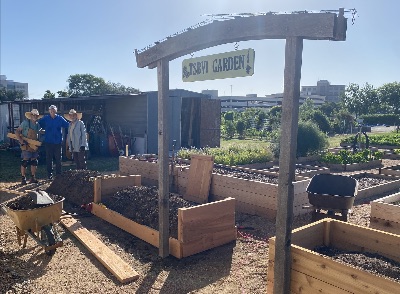
Returning TSBVI students will discover brand-new raised beds upon their return in the fall. Premium rough-hewn western red cedar was the material of choice, and it is expected to last about 15 years. Sunshine’s partnership with TSBVI is an important outreach program and central to CGICT’s mission, which is to provide opportunities for all to engage in organic community gardening. Many thanks to the TSBVI Workgroup for the terrific project, pictured above (from left to right), Robert Jarry, Brian King and Jim Willmann.
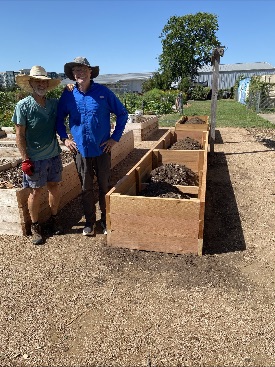
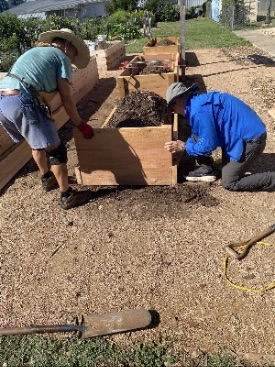
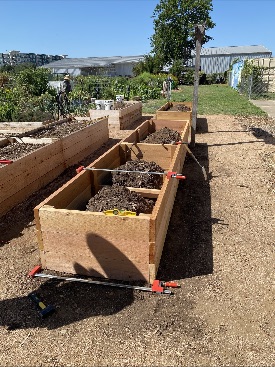
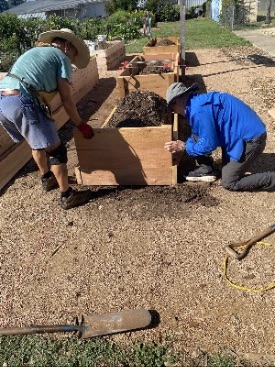
Photos by Jim Willmann
Book to Borrow
by Susan Van Haitsma
July 17, 2026
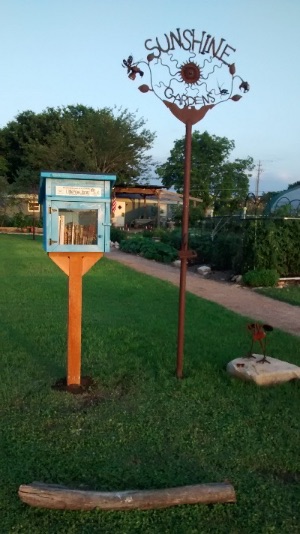
A writer and gardener friend, Clare Hanrahan, has just authored “An Urban Uprising,” a lively account of the origin story of Elder & Sage Community Gardens, a thriving oasis in downtown Asheville, NC that she and other elders created in a former vacant gravel lot.
I loved the book, partly because it echoes joys and challenges we have as community gardeners in Austin. I’ve put 2 copies in the Sunshine Little Free Library for anyone to read.
Results of 19 Tomato Varieties
by Randy Thompson
July 17, 2026
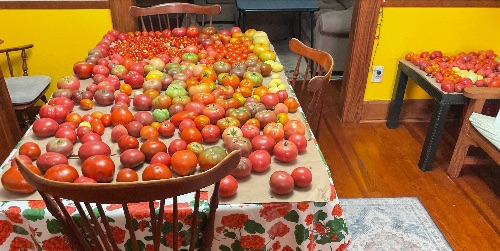
Tomatoes Ripening at Home. Photo by Randy Thompson
These are the results of the 19 tomato varieties we tried in 2026 in our plot. Lots of them were new to us.
Aunt Gladys – production was average, flavor good
Big Sandy– production was low, flavor good
Carolina Dusk– production was outstanding, flavor very good, and out produced the other black tomatoes in our plot
Earl -production was low, flavor good
Justin’s Fire Opal – production was above average, flavor good, rough texture on surface and poor keeping qualities
Maggie Mater– outstanding production, good flavor, the best of the new tomatoes
Marcus Meatball – average production, average flavor
Palemeno– production was low, flavor average fresh, large (some exceeded six inches), very dense flesh with few seeds made great sauce
Potato Leaf Yellow– production was low, outstanding flavor, the color was orange
San Antonio Rose– outstanding production, good flavor, large sized slicer
Solar Vortex– good production, distinctive flavor, the anthocyanins were low and the exterior was red with gold stripes, red firm interior
Tonatico– made me remember why I don’t plant cherry tomatoes, production was relentless, flavor a little lacking, used most roasted or dehydrated
West Virginia Penitentiary- average production, average flavor
Overall a very productive, if late, year. Among the old favorites, Cream Sausage, Lime Green Salad, Muddy Mamba (rain did cause a lot of cracking), and Pink Furry Boar had outstanding production.
Thorburn’s Terracotta and Summer Cider did not produce true to type with two plants each.
Editor’s Note: This has been a fantastic year for tomatoes. Watch for another article next week highlighting the results of Sunshine’s Tomato Trial Garden.
Cutting Corners
by Randy Thompson
July 17, 2026
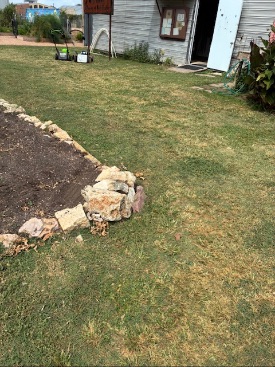
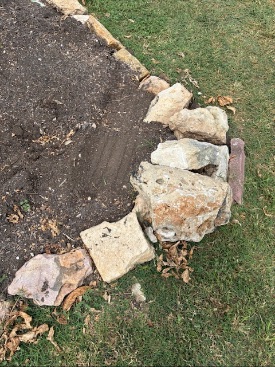
Please don’t cut your corners so close. There’s no reason to drive through somebody else’s Garden.
Issues Accessing the Website
You may have noticed issues accessing the Sunshine Community Garden website–we are working on it and hope to get it running smoothly soon.
— Submitted by Lauren Ames
Garden Education by Ila Falvey
July 17, 2026
Do take advantage of workable soil and cooler weather to get your garden and surrounding paths in shape.
Pick your overripe and rotting fruit from the plant and on the ground and bring it to the “Weed Pile” for offsite disposal. This will reduce proliferation of insect pests and plant diseases.
Please bring cucumbers and damaged but not rotten tomatoes to the chickens and place in the pail outside the coop.
I have both a supply of cardboard and newspaper for those of you who would like to use it as a base for your pathways (before you add chips). I will put them in the hoop house.
Vegetables can get bitter when grown in the heat. Taste your cucumbers before you spend time making a salad. Eggplant also can get very bitter. Keep smashing the Colorado potato beetles on your eggplant.
Succession Planting Video
I found this information on succession planting interesting even though it is mostly for colder areas:
Wonderful rain and fire ant mounds have popped up all over. Sunshine supplies a drench of orange oil and molasses to control them. But use it properly as it is quite expensive. The drench is in bottles outside the tool shed.
Instructions for use are from the Mississippi Extension web site.
Use a watering can, or similar container, to mix and apply the drench. (We have buckets) Just read the posted instructions, mix the specified amount of insecticide in water, and pour over the mound.
The key to success with liquid drenches is to use enough liquid to thoroughly soak the mound. Depending on the size of the mound, this ranges from one to two gallons. Begin by applying about ¼ of the total volume to a 10 to 12 inch band around the outside of the mound. This prevents the queen from escaping through underground foraging tunnels and improves control of workers. Then apply the rest of the drench directly to the mound.
Liquid drenches are time consuming to mix and apply, but when applied properly they will eliminate a mound within a few hours.
Happy Gardening!